Showing posts with label Google Play game services. Show all posts

Your next growth market: Realizing the potential of MENA


Posted by Mohammad El-Saadi, BD, Google Play


We know that many developers want to take advantage of growth opportunities in
new regions, but are held back by not knowing the most important areas to focus
on. That's why we wanted to share stories from our partners in the Middle East
and North Africa (MENA). It's a fast growing region for Google Play, and one
that already represents a sizable revenue opportunity. They've shared their
experiences, and some key things to focus on if you're thinking of launching in
the region.


Middle East and North Africa overview


MENA is a diverse region in terms of disposable income, access to connectivity,
and smartphone penetration. However, it is possible to broadly group MENA into
two types of market:


Growth markets


  • Examples: Saudi Arabia, United Arab Emirates (UAE), Kuwait and the rest of
    the Gulf Cooperation Council (GCC).
  • Very high smartphone penetration (on par with top western european markets),
  • Large disposable income
  • Robust growth in spend on mobile apps and games


Emerging markets


  • Examples: Morocco, Egypt and Iraq.
  • Large populations
  • Significant growth in smartphone (primarily Android) adoption.


Opportunities


Localization


If you want to be successful in MENA, localization is key. In Saudi Arabia 19 of
the top 20 grossing apps & games have their Google Play Store listing localized
and the majority of those have their actual app/game localized as well. By
localizing to Arabic, mobile app and game developers have found great success in
the region.


When Singapore-based href="https://play.google.com/store/apps/details?id=com.wego.android">Wego.com
localized to Arabic, they achieved over 200% YoY growth in
MENA
, grew their app rating from 3.5 to over 4.5 among Arab travelers
and increased Arab users' retention rates by 200%. Today, MENA represents over
65% of their users.


To do localization well, here are a few things to consider:


  • Localize your store listing into Arabic including your video, screenshots
    and text. If you are targeting specific countries within MENA consider using
    local dialects, otherwise use formal Arabic. Consider using Store Listing
    Experiments to optimize your listing for local audiences.
  • If applicable, flip your app/game UI to be right-to-left.
  • Beware of common issues when localizing to Arabic: Arabic letters appearing
    disjointed or showing up in reverse order and the ordering of words getting
    mixed up when sentences contain both Latin and Arabic words
  • Localize pricing by showing appropriate local currency and rounding. Note
    that different countries in MENA have different currencies and
    affordability/willingness to pay.
  • Plan around major local events such as the holy month of Ramadan, when after
    fasting from dawn to sunset, families and loved ones gather for meals, laughs
    and stories. We've found that during this month usage of apps and games
    increases significantly in MENA.
  • Provide local customer support
  • Be culturally sensitive in your communication and content - avoid
    stereotypes and keep in mind the relatively conservative nature of users in the
    region
  • Leverage the power of YouTube to reach your audiences in MENA. Saudi Arabia
    for instance is the second largest market for YouTube globally in terms of views
    per capita.


Refer to our href="https://developer.android.com/distribute/tools/localization-checklist.html?utm_campaign=android_discussion_mena_112116&utm_source=anddev&utm_medium=blog">Localization
Checklist for some best practices when localizing for any language.


Gaming


Gaming is a high growth and revenue opportunity in MENA. Most countries in the
region have a median age of 30 or lower, smartphone growth will continue to grow
at double digits, which makes gaming a key segment for users in the region.
Today's local top grossing charts and dominated by Midcore strategy games.
Interestingly, GCC countries have some of the highest Average Revenue Per Paying
User rates globally.


International titles, including Clash of Clans, Clash Royale, Mobile Strike and
Clash of Kings, have performed incredibly well in the region. In addition,
titles specifically targeting MENA have also seen tremendous success. href="https://play.google.com/store/apps/dev?id=7006382305291329295">Revenge of
the Sultans, by ONEMT, from China, has been the top grossing title across
several MENA countries for many months. Similarly, when IGG.com launched the
Arabic version of Castle Clash, they grew revenue from MENA by
58%
within 4 months.


As the market evolves, there is also a huge opportunity for other genres (such
as RPG, FPS, and sports) which are not present at scale in the region yet.


Google Play in MENA


We continue to invest in making sure that users are able to pay for their
favorite apps and games by launching locally relevant payment methods in MENA.
Today, we have carrier billing available with the major networks in Saudi
Arabia, UAE and Kuwait. We plan to expand coverage in more countries, including
Qatar and Bahrain, in the future.


We are also committed to increasing the quality and availability of Arabic apps
and games for MENA users, which is why we launched our href="https://play.google.com/store/recommended?sp=CAEwAFovCilwcm9tb3Rpb25fMzAwMjUxMl9BcHBzX01FTkFfTm93X0luX0FyYWJpYxAHGAM%3D:S:ANO1ljLJ7kY&c=apps">Now
in Arabic href="https://play.google.com/store/recommended?sp=CAEwAFovCilwcm9tb3Rpb25fMzAwMjUxMl9BcHBzX01FTkFfTm93X0luX0FyYWJpYxAHGAM%3D:S:ANO1ljLJ7kY&c=apps">cohref="https://play.google.com/store/recommended?sp=CAEwAFovCilwcm9tb3Rpb25fMzAwMjUxMl9BcHBzX01FTkFfTm93X0luX0FyYWJpYxAHGAM%3D:S:ANO1ljLJ7kY&c=apps">llhref="https://play.google.com/store/recommended?sp=CAEwAFovCilwcm9tb3Rpb25fMzAwMjUxMl9BcHBzX01FTkFfTm93X0luX0FyYWJpYxAHGAM%3D:S:ANO1ljLJ7kY&c=apps">echref="https://play.google.com/store/recommended?sp=CAEwAFovCilwcm9tb3Rpb25fMzAwMjUxMl9BcHBzX01FTkFfTm93X0luX0FyYWJpYxAHGAM%3D:S:ANO1ljLJ7kY&c=apps">tihref="https://play.google.com/store/recommended?sp=CAEwAFovCilwcm9tb3Rpb25fMzAwMjUxMl9BcHBzX01FTkFfTm93X0luX0FyYWJpYxAHGAM%3D:S:ANO1ljLJ7kY&c=apps">onhref="https://play.google.com/store/recommended?sp=CAEwAFovCilwcm9tb3Rpb25fMzAwMjUxMl9BcHBzX01FTkFfTm93X0luX0FyYWJpYxAHGAM%3D:S:ANO1ljLJ7kY&c=apps">
featuring apps and games that have recently localized to Arabic. This
collection will be regularly updated. If you're interested in being included, href="https://docs.google.com/a/google.com/forms/d/e/1FAIpQLSfuqUnnrY4a9XUsKlqrfow_7v9p1jMX_ae7DLnshk30pqOVZQ/viewform">submit
your localized app/game.


Google Developer Day at GDC

Day 2 of Game Developers Conference 2014 is getting underway and today Google is hosting a special Developer Day at Moscone Center in San Francisco.


Join us at the sessions


Building on yesterday’s announcements for game developers, we'll be presenting a series of sessions that walk you through the new features, services, and tools, explaining how they work and what they can bring to your games.


We'll also be talking with you about how to reach and engage with hundreds of millions of users on Google Play, build Games that scale in the cloud, grow in-game advertising businesses with AdMob, track revenue with Google Analytics, as well as explore new gaming frontiers, like Glass.


If you’re at the conference, the Google Developer Day sessions are a great opportunity to meet the developer advocates, engineers, and product managers of the Google products that drive users, engagement and retention for your games. If you’re remote, we invite you to sit-in on the sessions by joining the livestream below or on Google Developers channel on YouTube.


The Developer Day sessions (and livestream) kick off at 10:00AM PDT (5:00PM UTC). A complete agenda is available on the GDC Developer Day page.


LiquidFun 1.0


Last December we announced the initial release of LiquidFun, a C++ library that adds particle physics, including realistic fluid dynamics, to the open-source Box2D.


To get Google Developer Day started, we’re releasing LiquidFun 1.0, an update that adds multiple particle systems, new particle behaviors, and other new features.


Check out the video below to see what Liquid Fun 1.0 can do, visit the LiquidFun home page, or join today's LiquidFun session at Google Developer Day to learn how LiquidFun works and how to use particle physics in your games. The session starts at 4:35PM PDT (11:35PM UTC).


Unlocking the Power of Google for Your Games, at GDC

By Greg Hartrell, Google Play Games team


Today, everyone is a gamer — in fact, 3 in every 4 Android users are playing games, allowing developers to reach an unprecedented audience of players in an Android ecosystem that’s activated over one billion devices. This has helped Google Play Games — Google’s cross-platform game service and SDK for Android, iOS and the web (which lets you easily integrate features like achievements, leaderboards, multiplayer and cloud save into your games) — grow at tremendous speed. The momentum continues on Google Play, where four times more money was paid out to developers in 2013 than in 2012.


With the Game Developers Conference (GDC) this week, we announced a number of new features for Google Play Games and other Google products. As they launch over the coming weeks, these new services and tools will help you unlock the power of Google to take your games to the next level.


Power your game and get discovered


With game gifts, players in your games can send virtual in-game objects to anyone in their circles or through multiplayer search.


To help players get the most out of your games, Play Games will be expanding engagement and discovery options.


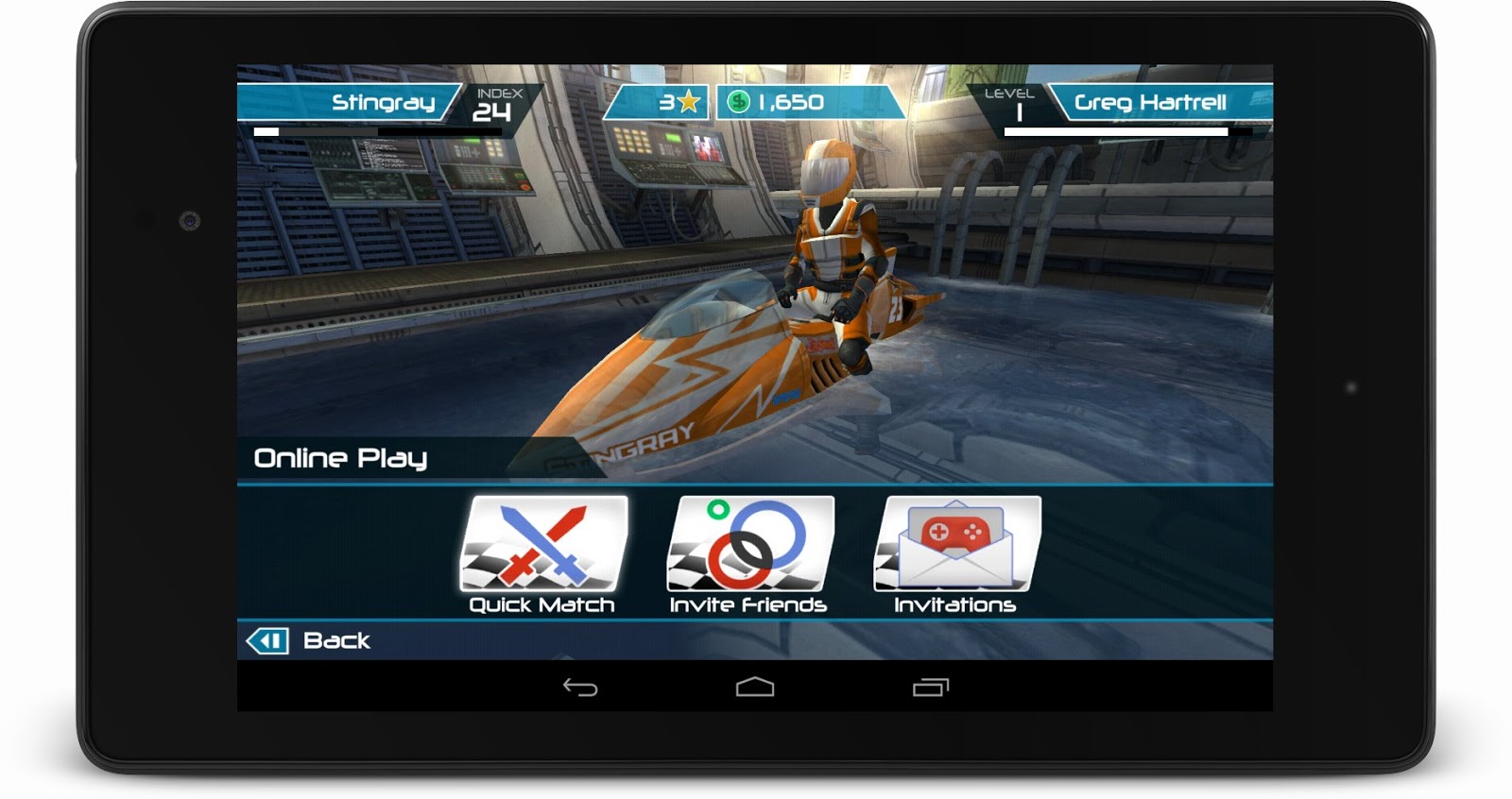
We'll be introducing game gifts, a new service that lets players send virtual in-game objects to anyone in their circles or through player search. The Play Games app now supports multiplayer invites directly, further helping players discover your game and keep them playing. And the Google Play Store will also feature 18 new game categories, making it easier for players to find games they'll love.


Tools to take your game to the next level


Further enhancing Google Play Game services, we're expanding multiplayer to support iOS, bringing turn-based and real-time multiplayer capabilities to both Android and iOS.


To further help with cross platform game development, we're updating our Play Games Unity Plug-in to support cross-platform multiplayer services, and introducing an early Play Games C++ SDK to support achievements and leaderboards.


In addition, we're launching enhanced Play Games statistics on the Google Play Developer Console, providing easy game analytics for Play Games adopters. Developers will gain a daily dashboard that visualizes player and engagement statistics for signed in users, including daily active users, retention analysis and achievement, and leaderboard performance.


Ad features to better optimize your business


Of course, once you build a great gaming experience, it's important to get rewarded for your work, which is why we'll also be introducing new features to the AdMob platform. We're making Google Analytics available directly in the AdMob interface, so you can gain deeper insights into how users are interacting with your app. Turning those insights into effective action is vital, so we're excited by the opportunities that in-app purchase ads will offer — enabling you to target users with specific promotions to buy items in your game. Advertising continues to be a core vehicle driving many game developers' success, so we're also bringing you new ways to optimize your ads to earn the most revenue.


Watch the Google Sessions at GDC


Check out the stream from our Google Developer Day sessions at GDC 2014. Learn more about how to reach and engage with hundreds of millions of users on Google Play, build Games that scale in the cloud, grow in-game advertising businesses with AdMob, track revenue with Google Analytics, as well as explore new gaming frontiers, like Glass.


Google Play Services 4.1

gps


The latest release of Google Play services is now available on Android devices worldwide. It includes new Turn Based Multiplayer support for games, and a preliminary API for integrating Google Drive into your apps. This update also improves battery life for all users with Google Location Reporting enabled.


You can get started developing today by downloading the Google Play services SDK from the SDK Manager.


Turn Based Multiplayer


Play Games now supports turn-based multiplayer! Developers can build asynchronous games to play with friends and auto-matched players, supporting 2-8 players per game. When players take turns, their turn data is uploaded to Play Services and shared with other players automatically.


We are also providing an optional new “Connecting to Play Games” transition animation during sign-in, before the permission dialog appears. This helps contextualize the permission dialog, especially in games that ask for sign in on game start.


Google Drive


This version of Google Play Services includes a developer preview of the new Google Drive API for Android. You can use it to easily read and write files in Google Drive so they're available across devices and on the web. Users can work with files offline too — changes are synced with Google Drive automatically when they reconnect.


The API also includes common UI components including a file picker and save dialog.


Google Mobile Ads


With Google Play services 4.1, the Google Mobile Ads SDK now fully supports DoubleClick for Publishers, DoubleClick Ad Exchange, and Search Ads for Mobile Apps. You can also use a new publisher-provided location API to provide Google with the location when requesting ads. Location-based ads can improve your app monetization.


Google+


An improved Google+ sharing experience makes it even easier for users to share with the right people from your app. It includes better auto-complete and suggested recipients from Gmail contacts, device contacts and people on Google+.


More About Google Play Services


To learn more about Google Play services and the APIs available to you through it, visit the Google Services area of the Android Developers site. Details on the APIs are avaialble in the API reference.


For information about getting started with Google Play services APIs, see Set Up Google Play Services SDK


New Tools to Take Your Games to the Next Level


In this mobile world, games aren't just for the hardcore MMOG fan anymore, they're for everyone; in fact, three out of four people with an Android phone or tablet play games. If you're a game developer, Google has a host of tools available for you to help take your game to the next level, including Google Play game services, which let's you leverage Google's strength in mobile and cloud services so you can focus on building compelling game experiences for your users. Today, we're adding more tools to your gaming toolbox, like the open sourcing of a 2D physics library, as well as new features to the Google Play game services offering, like a plug-in for Unity.


LiquidFun, a rigid-body physics library with fluid simulation


First, we are announcing the open-source release of LiquidFun, a new C++ 2D physics library that makes it easier for developers to add realistic physics to their games.


Based on Box2D, LiquidFun features particle-based fluid simulation. Game developers can use it for new game mechanics and add realistic physics to game play. Designers can use the library to create beautiful fluid interactive experiences.


The video clip below shows a circular body falling into a viscous fluid using LiquidFun.


The LiquidFun library is written in C++, so any platform that has a C++ compiler can benefit from it. To help with this, we have provided a method to build the LiquidFun library, example applications, and unit tests for Android, Linux, OSX and Windows.


We’re looking forward to seeing what you’ll do with LiquidFun and we want to hear from you about how we can make this even better! Download the latest release from our LiquidFun project page on GitHub and join our discussion list!


Google Play Games plug-in for Unity


If you are a game developer using Unity, the cross-platform game engine from Unity Technologies, you can now more easily integrate game services using a new Google Play Games plug-in for Unity. This initial version of the plug-in supports sign-in, achievements, leaderboards and cloud save on Android and iOS. You can download the plug-in from the Play Games project page on GitHub, along with documentation and sample code.


New categories for games in Google Play


New game categories are coming to the Play Store in February 2014, such as Simulation, Role Playing, and Educational! Developers can now use the Google Play Developer Console to choose a new category for their apps if the Application Type is “Games”. The New Category field in the Store Listing will set the future category for your game. This will not change the category of your game on Google Play until the new categories go live in February 2014.


New Developer Features in Google Play Games

Posted by Greg Hartrell, Google Play Games team


Mobile games are on fire right now; in fact, three out of every four Android users are playing games. Earlier in the year we launched Google Play Games — Google’s platform for gaming across Android, iOS, and the web — to help you take advantage of this wave of users. Building on Google Play Services, you can quickly add new social features to your games, for richer game experiences that drive user acquisition and engagement across platforms.


Today we’re announcing three new features in Google Play Games that make it easier to understand what players are doing in your game, manage your game features more effectively, and store more game data in the Google cloud.


Game services statistics in the Developer Console


Now you can see stats about your game’s player activity in Google Play Games right in the Google Play Developer Console. You can see how many players have signed into your game through Google, the percentage of players who unlocked an achievement, and how many scores are posted to your leaderboards.


Game services alerts in the Developer Console


Did you mangle the ID for an achievement or leaderboard? Forget to hit the publish button? Do you know if your game is getting throttled because you accidentally called a method in a tight loop? Fear not! New alerts will now show up in the Developer Console to warn you when these mistakes happen, and guide you quickly to the answers on how to fix them.


Double your Cloud Save storage


Cloud Save is one of our most popular features for game developers, providing up to 512KB of data per user, per game, since it was introduced. You asked for more storage, and we are delivering on that request. Starting October 14th, 2013, you’ll be able to store up to 256KB per slot, for a total of 1MB per user. Game saves have never been happier!


More about Google Play Games


If you want learn more about what Google Play Games offers and how to get started, take a look at the Google Play Games Services developer documentation.

Unlocking More Users, with Tablets and Games

Posted by Purnima Kochikar, Director of Business Development, Games & Applications


Last week, we unveiled a number of new things in the world of Android. And while we already showcased the new tools available at your disposal in Android 4.3, we also unveiled a new Nexus 7 tablet, as well as the Google Play Games app, both of which represent opportunities to take advantage of a growing number of users.


Nexus 7 and the Android tablet revolution


If you’re a developer optimizing your app for Android tablets, no doubt you’re familiar with the original Nexus 7. It was Google’s statement on what a great Android tablet experience should look like, and since then, the Android tablet ecosystem has come a long way. There have already been more than 70 million activations of Android tablets, with more than 1 in 2 tablets sold today running Android. We’re starting to see with Android tablets what could be the hockey stick growth all of us experienced a couple of years ago with Android smartphones, and we hope that the new Nexus 7 continues to fuel this growth even further.


Most top developers on Android have already prepared their applications for this wave of new Android tablet users, including many of the essentials, like the New York Times, Zappos, Evernote, Flipboard, Pinterest and more. To help users find your tablet-designed apps more easily on Google Play, you can now choose to only see apps designed for tablets in the top lists. There are also over 50 new collections, which highlight outstanding tablet apps.


To take advantage of the Android tablet revolution, check out our Tablet App Quality Checklist, which has tips and techniques on how to deliver a great app experience for tablet users. It details all of the key things you need to do to optimize your app for tablets, like taking advantage of the extra screen real estate and adjusting font sizes and touch targets, to things you can do on the distribution side, like declaring support for tablet screens and showcasing your tablet UI on Google Play by uploading tablet-specific screenshots. Optimizing your app for Android tablets will unlock a whole new group of users, like those who are about to receive their new Nexus 7 tablets.


Taking your game to the next level


The Android games category on Google Play is on fire; in fact, the vast majority of top mobile game developers are building Android tablet games, and most new titles launch immediately on Android. To help game developers take advantage of the next generation of games, at Google I/O in May, we introduced Google Play game services, our gaming platform for Android, iOS, and the web. By building on Google’s strengths in mobile and cloud services, Google Play game services allows game developers to focus on what they’re good at: creating great gaming experiences for their users.


Turbocharging that growth even more, on Wednesday we introduced the Google Play Games app, which brings your friends together with the games you love, where you can invite a friend and start challenging gamers around the world, compete for top achievements, and race to the top of the leaderboard.


Since the launch at Google I/O, just over two months ago, over one thousand games have added Google Play game services, with millions of users enjoying features like leaderboards and multiplayer inside of the games they love. Some of those early developers using Google Play game services are reporting incredible upticks in vital engagement metrics; for instance, Concrete Software is seeing session length up 15%, and Glu is reporting a 40% increase in 7-day user retention.


Here are a few things you can do to take your game to the next level with Google Play:


  • Integrate with Play Games using achievements and leaderboards to activate your players.

  • Add real-time multiplayer to competitive and cooperative games and increase engagement.

  • Use Play Games branding guidelines and create rich visuals that bolster your presence in the Google Play Games app.


Whether it be getting your app ready for the wave of new Android tablets that are lighting up each day, or opening up a whole new set of features for your users with Google Play game services, a great Android experience starts with a great app or game. That’s why we’re working hard to help provide you with the tools and features needed to create those great experiences for your users, and to help you reach as many of them as possible in the process, with Google Play.


Social Gaming, Location, and More in Google Play Services

Posted by Greg Hartrell, Angana Ghosh, Francesco Nerieri, Francis Ma, and the Google Play services team


Some of the most exciting Android announcements at Google I/O this year are part of our latest Google Play services release, version 3.1.


The new version brings you Google Play games services, part of a new cloud-integrated platform for social gaming based on Google+ identity. Also included are location-based services that make it easier to build efficient location-aware apps. For apps using the popular Google Cloud Messaging platform, you can now take advantage of XMPP messaging and easier setup. Finally, Cross-Platform Single Sign On for Google+ Sign-In is now available to your apps.


You can get started using these APIs and services right away—Google Play services 3.1 is already rolling out to Android devices across the world, with support reaching all the way back to Froyo.


Google Play games services


Games are always popular with Android developers, and the announcement of Google Play game services raised the volume even more.


Google Play games services lets you make your games more social, with achievements, leaderboards, and multiplayer, and they help you extend your user’s games across multiple devices by storing game saves and settings in the cloud.


Several great Android games are already using these new game services, including World of Goo, Super Stickman Golf 2, Beach Buggy Blitz, Kingdom Rush, Eternity Warriors 2, and Osmos.


You can take advantage of the new services right away using the games services SDK included in Google Play services. For all the details, check out the Google Play games services documentation.


Location APIs


If you build location-aware Android apps, you’ll want to check out the new location APIs. They make it easy to build accurate, fast, and efficient apps, with new contextual features.


The Fused Location Provider intelligently manages the underlying location technology and gives you the best location according to your needs. We’ve simplified the location APIs and completely rewritten our location algorithm to make location more accurate, flexible and use less battery.


Using the new geofencing API, your app can set up geographic boundaries around specific locations and then receive notifications when the user enters or leaves those areas.


With apps becoming increasingly contextual, understanding what the user is doing is critical to surfacing the right content. A new activity recognition API makes it easy to check the the user’s current activity — still, walking, cycling, and in-vehicle — with very efficient use of the battery. We use low-power sensors and machine-learning classifiers to recognize the activity, giving you both both high accuracy and low battery usage.


To learn more, head over to our training classes at Making Your App Location Aware or dive directly into the reference docs.


Google Cloud Messaging


We’ve added APIs to make it easier to set up GCM in your apps, and in the service itself we’ve added new messaging capabilities for your apps to use.


A new registration API lets your app register with the service using a single method call and begin receiving messages as soon as the call returns.


In the GCM service itself we’ve added support for messaging over XMPP with the new GCM Cloud Connection Server (CCS). Your servers now have a persistent connection over which to send large numbers of messages, very quickly, and with no overhead. New APIs in Google Play services let apps send messages back upstream to third-party servers using CCS, without needing to manage network connections. This helps keep battery and data usage to a minimum.


Also new in the GCM service is a User Notifications API. This new API lets you synchronize notifications across a user’s multiple devices — when the user dismisses a notification on one device, the notification disappears automatically from all the other devices. To get started with GCM, head over to the developer documentation.


Google+ Cross-Platform Single Sign On


Many people use apps on multiple devices throughout the day, switching between their laptops, tablets, and mobile devices. After signing-in to an app on one device, it’s natural that when they pick up a different device and use the same app, they would expect to be signed in there as well.


To help you provide this kind of seamless transition between platforms and stay connected with users across devices, we’re adding Cross-Platform Single Sign On to our Google+ Sign-In capabilities.


If your app is already using Google+ Sign-In, you’ve already got support for Cross-Platform Single Sign On. This feature will be enabled automatically over the coming days.


Cross-Platform Single Sign On gives you a great way to build longer-running, cross-platform user experiences, and it dovetails perfectly with the new Google Play games services for bridging game state across devices using the cloud.


To learn more about Google+ Sign-In, check out http://developers.google.com/+.


More About Google Play Services


Google Play Services is our platform for offering you better integration with Google products, and providing new capabilities to use within your apps. To learn more about Google Play services and the APIs available to you through it, visit the Google Services area of the Android Developers site.